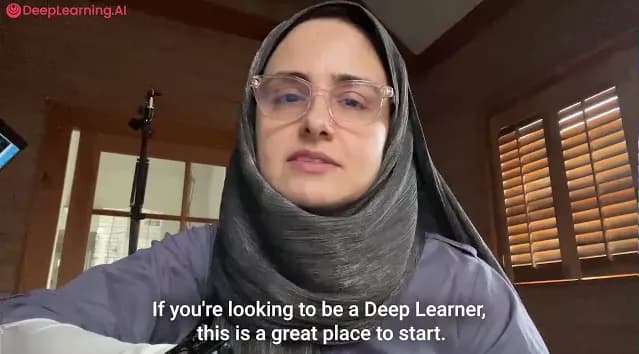
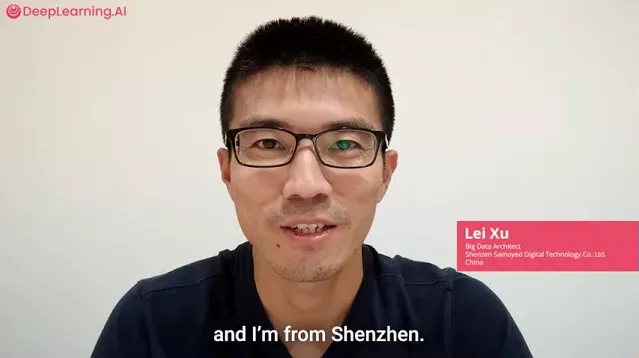
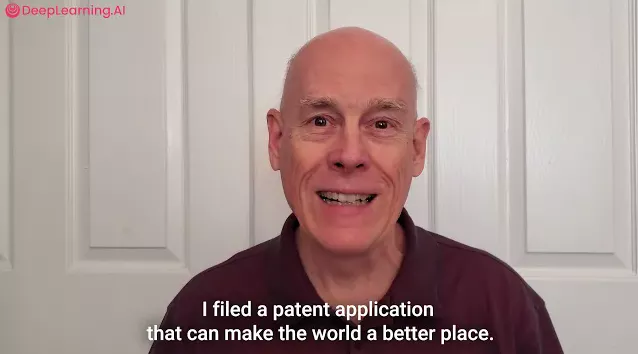
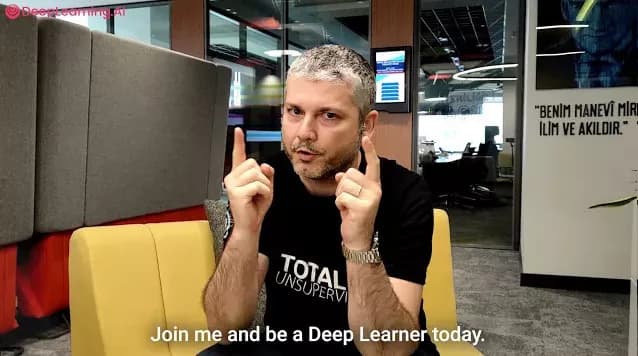
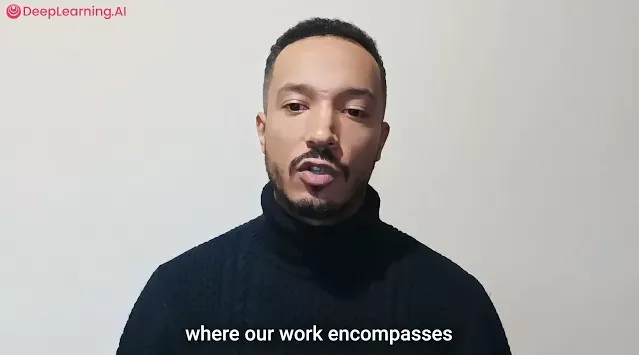
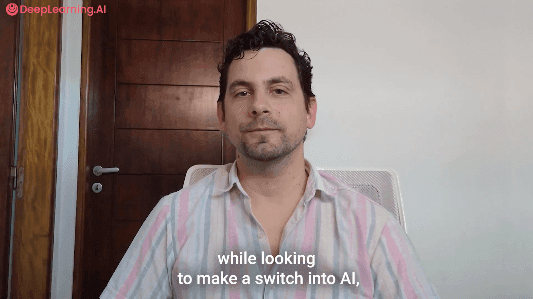
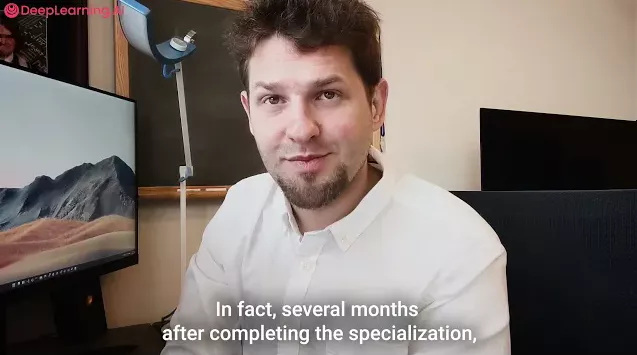
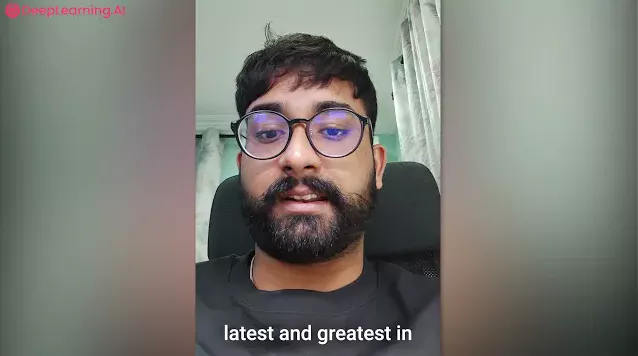
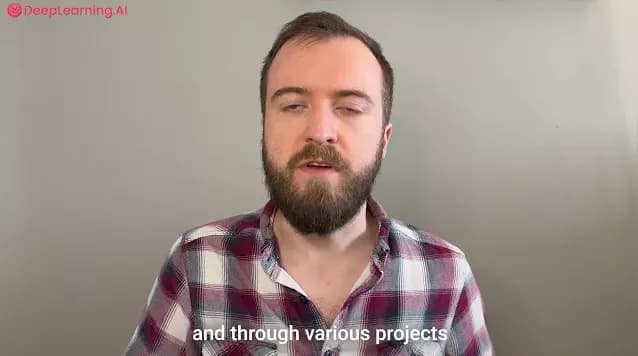
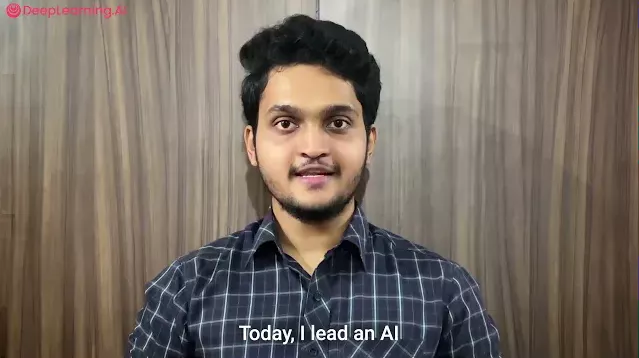
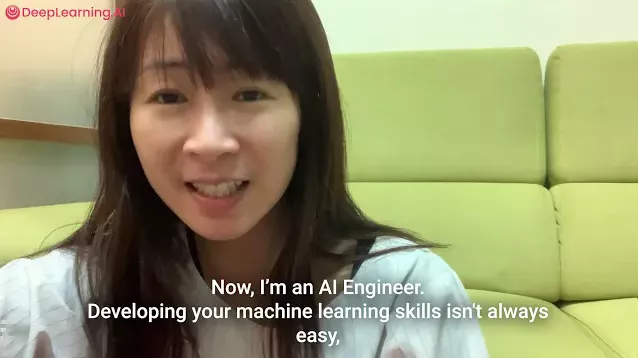
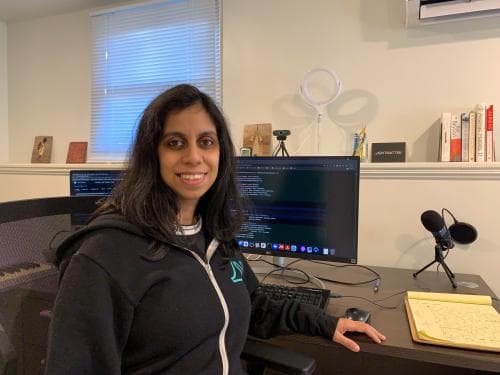
You might be wondering if this is the right program for you, worried that you don’t have the time, or afraid that you won’t be able to keep up?
We understand that it can be daunting to start something new.

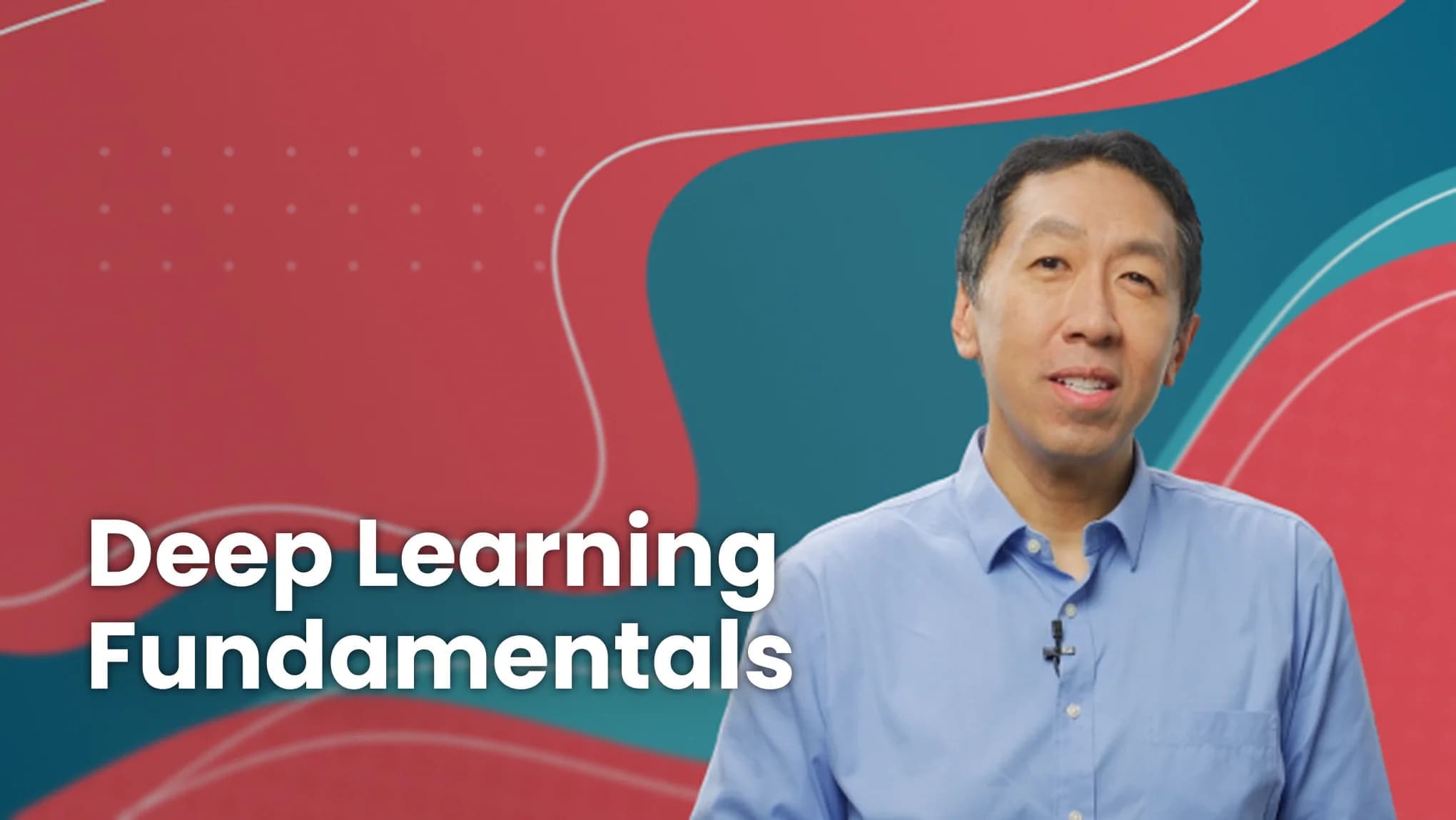
Instructors: Andrew Ng, Kian Katanforoosh, Younes Bensouda Mourri

Earn a certificate with PRO
 DeepLearning.AI
You might be wondering if this is the right program for you, worried that you don’t have the time, or afraid that you won’t be able to keep up?
We understand that it can be daunting to start something new.
Has clear, concise modules that allow for self-paced learning.
Introduces practical techniques to help you get started on your AI projects and develop an industry portfolio.
Has a 1 million-strong learner community that will support and guide you.
Breaks down foundational concepts into easy-to-understand lectures and engaging assignments.
Is up-to-date with the leading-edge in machine learning.
Is rated 4.9 out of 5 by 120K+ learners and is among the most popular data science programs on Coursera
“After completing the Deep Learning Specialization, I got two promotions and an award and was able to work with the R&D team at work. I also got the opportunity to teach undergrad engineering students. These experiences, starting with DLS, have molded my career.”
“I decided to try to understand this thing called AI that everyone was talking about and ended up doing the Deep Learning Specialization. I truly believe that this program should be given to senior students at universities as they’d get a valuable picture.”
“The Deep Learning Specialization helped me build the fundamental knowledge as well as practical applications of deep learning. I think the Deep Learning Specialization is a great starting point if someone wants to get into the field.”
“The introductions to Convolutional Neural Networks, Yolo, NLP, among others, really helped me hit the ground running when I got on the job market. As I developed more experience, I transitioned from being a multi-project consultant to being the lead scientist of a startup.”
“When my role as a software engineer at a big company started feeling claustrophobic, I quit without having another job in hand and enrolled in the Deep Learning Specialization. This fueled my knowledge appetite, and today, I work as a Machine Learning Engineer at Carted.”
“After the Deep Learning Specialization, I realized that deep learning isn’t just for those with a math background and decided to become a machine learning engineer. The knowledge I’d gained helped me transition from analytics to an AI researcher role in an NLP research lab.”
“The skills I acquired after completing the Deep Learning Specialization helped me get a better job. The insights it provided into the subject matter enabled me to develop new and innovative solutions to problems at work.”
“The Deep Learning Specialization allowed me to understand diverse approaches to solve problems and helped by providing deeper insight into the field. After completing the program, I understood foundational principles better and was able to feel much more in control.”
“Within a few minutes and a couple slides, I had the feeling that I could learn any concept. I felt like a superhero after this course. I didn’t know much about deep learning before, but I felt like I gained a strong foothold afterward.”
“The whole specialization was like a one-stop-shop for me to decode neural networks and understand the math and logic behind every variation of it. I can say neural networks are less of a black box for a lot of us after taking the course.”
“During my Amazon interview, I was able to describe, in detail, how a prediction model works, how to select the data, how to train the model, and the use cases in which this model could add value to the customer.”
#BeADeepLearner with the
Deep Learning Specialization.


Upgrade to Pro and gain unlimited accomplishments on your resume
You can download the annotated version of the course slides below.
*Note: The slides might not reflect the latest course video slides. Please refer to the lecture videos for the most up-to-date information. We encourage you to make your own notes.Deep Learning is a subset of machine learning where artificial neural networks, algorithms based on the structure and functioning of the human brain, learn from large amounts of data to create patterns for decision-making. Neural networks with various (deep) layers enable learning through performing tasks repeatedly and tweaking them a little to improve the outcome.
Over the last few years, the availability of computing power and the amount of data being generated have led to an increase in deep learning capabilities. Today, deep learning engineers are highly sought after, and deep learning has become one of the most in-demand technical skills as it provides you with the toolbox to build robust AI systems that just weren’t possible a few years ago. Mastering deep learning opens up numerous career opportunities.
The Deep Learning Specialization is a foundational program that will help you understand the capabilities, challenges, and consequences of deep learning and prepare you to participate in the development of leading-edge AI technology.
In this Specialization, you will build and train neural network architectures such as Convolutional Neural Networks, Recurrent Neural Networks, LSTMs, Transformers, and learn how to make them better with strategies such as Dropout, BatchNorm, Xavier/He initialization, and more. Get ready to master theoretical concepts and their industry applications using Python and TensorFlow and tackle real-world cases such as speech recognition, music synthesis, chatbots, machine translation, natural language processing, and more.
AI is transforming many industries. The Deep Learning Specialization provides a pathway for you to take the definitive step in the world of AI by helping you gain the knowledge and skills to level up your career. Along the way, you will also get career advice from deep learning experts from industry and academia.
By the end of the Deep Learning Specialization, you will be able to:
Expected:
Recommended:
The Deep Learning Specialization is for early-career software engineers or technical professionals looking to master fundamental concepts and gain practical machine learning and deep learning skills.
The Deep Learning Specialization consists of five courses. At the rate of 5 hours a week, it typically takes 5 weeks to complete each course except course 3, which takes about 4 weeks.
The Deep Learning Specialization has been created by Andrew Ng, Kian Katanforoosh, and Younes Bensouda Mourri.
Andrew Ng is Founder of DeepLearning.AI, General Partner at AI Fund, Chairman and Co-Founder of Coursera, and an Adjunct Professor at Stanford University. As a pioneer in machine learning and online education, Dr. Ng has changed countless lives through his work in AI, authoring or co-authoring over 100 research papers in machine learning, robotics, and related fields. Previously, he was chief scientist at Baidu, the founding lead of the Google Brain team, and the co-founder of Coursera – the world’s largest MOOC platform.
Kian Katanforoosh is the co-founder and CEO of Workera and a lecturer in the Computer Science department at Stanford University. Workera allows data scientists, machine learning engineers, and software engineers to assess their skills against industry standards and receive a personalized learning path. Kian is also the recipient of Stanford’s Walter J. Gores award (Stanford’s highest teaching award) and the Centennial Award for Excellence in teaching.
Younes Bensouda Mourri completed his Bachelor’s in Applied Mathematics and Computer Science and Master’s in Statistics from Stanford University. Younes helped create 3 AI courses at Stanford – Applied Machine Learning, Deep Learning, and Teaching AI – and taught two of them for a few years.
The Deep Learning Specialization is made up of 5 courses.
You can enroll in the Deep Learning Specialization on Coursera. You will watch videos and complete assignments on Coursera as well.
We recommend taking the courses in the prescribed order for a logical and thorough learning experience. Course 3 can also be taken as a standalone course.
A Coursera subscription costs $49 / month.
Yes, Coursera provides financial aid to learners who cannot afford the fee.
> Yes! You can preview the course for free by accessing the entire first module at no cost. This allows you to explore the learning experience before deciding if you’d like to continue. If you want full access to all modules, assessments, and the certificate of completion, you’ll need to upgrade to the paid version.
Visit coursera.org/business for more information, to pick up a plan, and to contact Coursera. For each plan, you decide the number of courses every member can enroll in and the collection of courses they can choose from.
You will receive a certificate at the end of each course if you pay for the courses and complete the programming assignments. There is a limit of 180 days of certificate eligibility, after which you must re-purchase the course to obtain a certificate. If you audit the course for free, you will not receive a certificate.
If you complete all n courses in the S12n and are subscribed to the Specialization, you will also receive an additional certificate showing that you completed the entire Specialization.
Those planning to attend a degree program can utilize ACE®️ recommendations, the industry standard for translating workplace learning to college credit. Learners can earn a recommendation of 10 college credits for completing the Deep Learning Specialization. This aims to help open up additional pathways to learners who are interested in higher education, and prepare them for entry-level jobs.
To share proof of completion with schools, certificate graduates will receive an email prompting them to claim their Credly badge, which contains the ACE®️ credit recommendation. Once claimed, they will receive a competency-based transcript that signifies the credit recommendation, which can be shared directly with a school from the Credly platform. Please note that the decision to accept specific credit recommendations is up to each institution and is not guaranteed.
To share proof of completion with schools, certificate graduates will receive an email prompting them to claim their Credly badge, which contains the ACE®️ credit recommendation. Once claimed, they will receive a competency-based transcript that signifies the credit recommendation, which can be shared directly with a school from the Credly platform. Please note that the decision to accept specific credit recommendations is up to each institution and is not guaranteed.
The Deep Learning Specialization are eligible for college credit at participating colleges and universities nationwide. The decision to accept specific credit recommendations is up to each institution and not guaranteed. Read more about ACE Credit College & University Partnerships here.